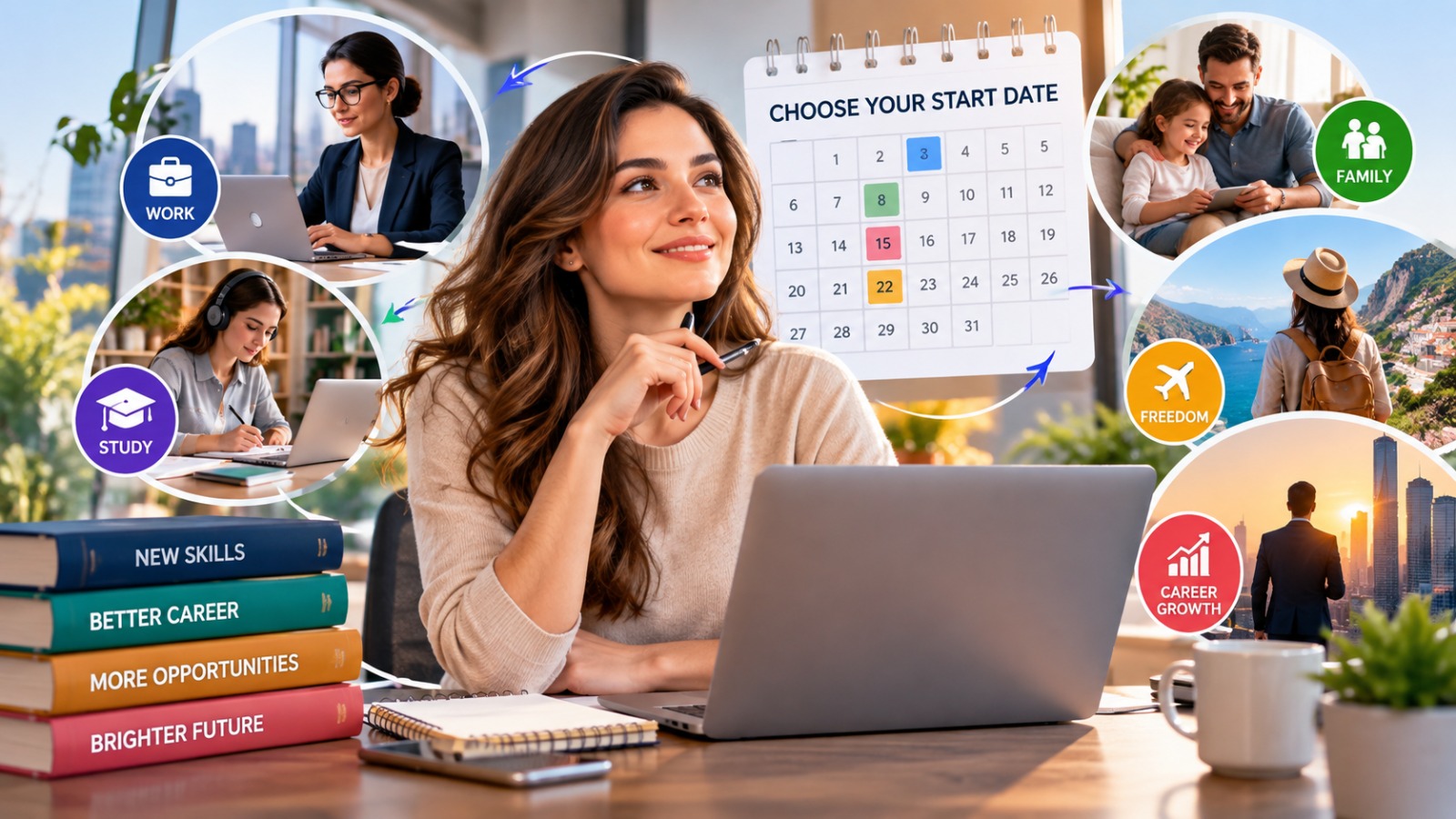
For many professionals across Asia, continuing education is no longer simply a matter of finding the right course. The bigger challenge is finding a learning format that can fit around an already demanding life. Work responsibilities, long commutes, family commitments, business travel, and professional development can make traditional study schedules difficult to maintain.
At the same time, career expectations are changing quickly. Professionals are increasingly expected to update their knowledge, develop new skills, and remain adaptable throughout their careers. This has increased interest in flexible education in Asia, particularly among learners who cannot pause their careers to return to full-time study.
Flexible education does not mean lowering academic standards or reducing the value of learning. Instead, it focuses on creating realistic opportunities for adults to study while managing their existing responsibilities. For working professionals, the ability to control when, where, and how they learn can make continuing education more achievable and sustainable.
Time is one of the biggest barriers facing working professionals who want to continue their education. A professional may have an eight-hour workday, several hours of commuting, household responsibilities, and other personal commitments before finding time for academic work.
The challenge becomes even greater for professionals working in major Asian cities, where long commuting times and demanding workplace cultures can leave limited energy for evening classes. Professionals who travel frequently for work may also find it difficult to attend programs that require consistent physical attendance.
Different career stages create different time pressures. A young professional may be focused on establishing a career, while a mid-career employee may be managing a team and family responsibilities. Business owners and senior professionals may have unpredictable schedules that make fixed classroom attendance particularly challenging.
| Traditional Time Demand | Flexible Education Approach |
|---|---|
| Fixed classroom hours | Learning at suitable times |
| Regular physical attendance | Online or blended participation |
| Long commuting time | Access from home or work |
| Limited schedule control | Greater control over study periods |
| Difficult to manage with travel | Learning materials available remotely |
This is one reason working professionals' education in Asia increasingly needs to consider lifestyle alongside academic content. A strong curriculum is important, but its accessibility can determine whether a learner is actually able to complete it.
Time flexibility can also support better concentration. A professional who studies when they are mentally prepared may engage more effectively with academic material than someone attending a class after a particularly demanding workday.
Traditional education continues to play an important role, particularly for students who can dedicate significant time to campus-based study. However, its structure can create practical difficulties for adult learners.
Many conventional programs operate around predetermined timetables. Classes may take place at specific times and locations, with attendance expectations that leave little room for unexpected professional responsibilities. Missing a class because of an important meeting, business trip, or family responsibility can create additional academic pressure.
This does not mean traditional education is ineffective. Rather, its structure is often designed around learners who can organise their schedules around education. Working professionals frequently need the opposite arrangement. They need education that can become part of their existing lifestyle.
| Factor | Traditional Learning | Flexible Learning |
|---|---|---|
| Schedule | Usually predetermined | More adaptable |
| Location | Often campus-based | Often accessible remotely |
| Work compatibility | Can be challenging | Designed to accommodate professional commitments |
| Travel | May be required | Often reduced |
| Study planning | Institution-led timetable | Greater learner control |
For professionals considering online learning flexibility, this difference can be significant. Flexibility gives learners more control over when they engage with lectures, readings, assignments, and other academic activities.
However, flexibility should not be confused with a lack of structure. Effective online education still requires deadlines, academic expectations, assessments, and meaningful interaction with instructors or peers. The difference is that these elements can often be organised in ways that are more compatible with professional life.
A well-designed flexible program therefore combines academic structure with practical adaptability.
One of the most important advantages of flexible education is that it allows professionals to continue learning without necessarily stepping away from their careers.
This can be particularly valuable when education is directly connected to professional development. A teacher may study new approaches to education while continuing to work in a school. A manager may explore leadership theories while applying them within their organisation. A business professional may learn about emerging technologies while observing their impact in the workplace.
This connection between academic learning and professional practice can make education more meaningful. Concepts discussed in class are no longer purely theoretical. Learners can consider how those ideas apply to real situations.
| Learning Approach | Professional Application |
|---|---|
| Academic theory | Understanding concepts and frameworks |
| Case studies | Analysing realistic workplace situations |
| Assignments | Applying knowledge to practical problems |
| Reflection | Connecting learning with professional experience |
| Projects | Developing solutions relevant to career goals |
Flexible education can also support career continuity. Rather than leaving employment for an extended period, professionals may be able to study alongside their current responsibilities.
For international learners, flexibility can provide another advantage. Professionals in different Asian countries may have different working hours, commuting patterns, cultural responsibilities, and employment structures. A learning model that provides greater control over study time can accommodate some of these differences.
The broader value of flexible education in Asia therefore goes beyond convenience. It can help create pathways for lifelong learning in a region where professional skills and workplace expectations continue to evolve.
Another important benefit is accessibility. Digital learning can reduce geographical barriers for learners who do not live close to a suitable educational institution. A professional in one city may be able to study with an institution located elsewhere without relocating.
At the same time, learners should evaluate online programs carefully. Flexibility is most valuable when supported by qualified educators, a well-designed curriculum, appropriate assessment, learner support, and clear academic expectations.
Flexibility alone does not guarantee academic success. Professionals also need sustainable learning habits.
One common mistake is treating flexible education as something that can always be postponed. Because learning can often take place at different times, it can be tempting to delay assignments or readings until the end of the week.
A better approach is to create a realistic study routine. This does not necessarily mean studying for several hours every day. Consistency is often more useful than occasional long study sessions.
For example, a professional might reserve specific weekday evenings for reading and use part of the weekend for assignments. Another learner may prefer shorter study sessions during commuting breaks or early mornings. The most effective routine depends on the individual's work and personal responsibilities.
| Unsustainable Habit | Sustainable Alternative |
|---|---|
| Studying only before deadlines | Spreading study across the week |
| Setting unrealistic daily goals | Creating achievable study targets |
| Ignoring workload changes | Adjusting the study plan when necessary |
| Multitasking constantly | Protecting focused study time |
| Relying entirely on motivation | Building a consistent routine |
Technology can also support sustainable learning. Digital calendars, reminders, note-taking applications, online discussion platforms, and learning management systems can help professionals organise academic responsibilities alongside work.
However, technology should support learning rather than become a distraction. Professionals benefit from creating clear boundaries between study time, work time, and personal time.
Another important factor is communication. Learners should make use of academic support when they need clarification. Asking questions, participating in discussions, and engaging with instructors can make online education feel more connected and academically rewarding.
Over time, these habits can turn education from an additional burden into a manageable part of professional development.
The future of adult education is increasingly connected to flexibility. As careers become more dynamic, professionals may need to learn repeatedly rather than complete education only at the beginning of their working lives.
This makes flexible education particularly relevant to lifelong learning. Professionals may return to education when they move into management, change industries, develop a new specialisation, or prepare for leadership responsibilities.
| Career Situation | Potential Educational Need | Value of Flexibility |
|---|---|---|
| Career advancement | Advanced knowledge or qualifications | Study alongside employment |
| Career transition | New professional skills | Continue learning during the transition |
| Leadership development | Management and strategic knowledge | Combine study with leadership responsibilities |
| Professional updating | Current knowledge and practices | Learn without taking a long career break |
Educational institutions also have an important role to play. Flexibility should be incorporated into course design rather than treated simply as an alternative delivery method.
That means considering how content is presented, how assessments are structured, how learners communicate with instructors, and how academic support is provided.
For professionals exploring further study, it is useful to examine the curriculum, faculty expertise, assessment methods, student support, qualification requirements, and overall learning structure before enrolling. A flexible program should still provide a serious and academically meaningful learning experience.
Programs that combine academic quality with adaptable learning structures can help professionals make education part of a long-term career strategy.
For busy professionals across Asia, education needs to recognise the realities of modern working life. Fixed schedules, long commutes, demanding careers, family responsibilities, and frequent professional changes can make conventional study difficult to manage.
Flexible education provides another pathway. By allowing learners greater control over when and where they study, it can make continuing education more compatible with professional and personal responsibilities.
The value of flexibility, however, goes beyond convenience. When supported by strong academic standards, effective teaching, meaningful assessment, and sustainable study habits, flexible learning can help professionals connect education with real workplace needs.
As lifelong learning becomes increasingly important, the ability to study without putting professional life on hold will remain valuable. For today's working professionals, the most meaningful education may not be education that asks them to stop everything else. It may be education designed to work alongside the life they are already building.