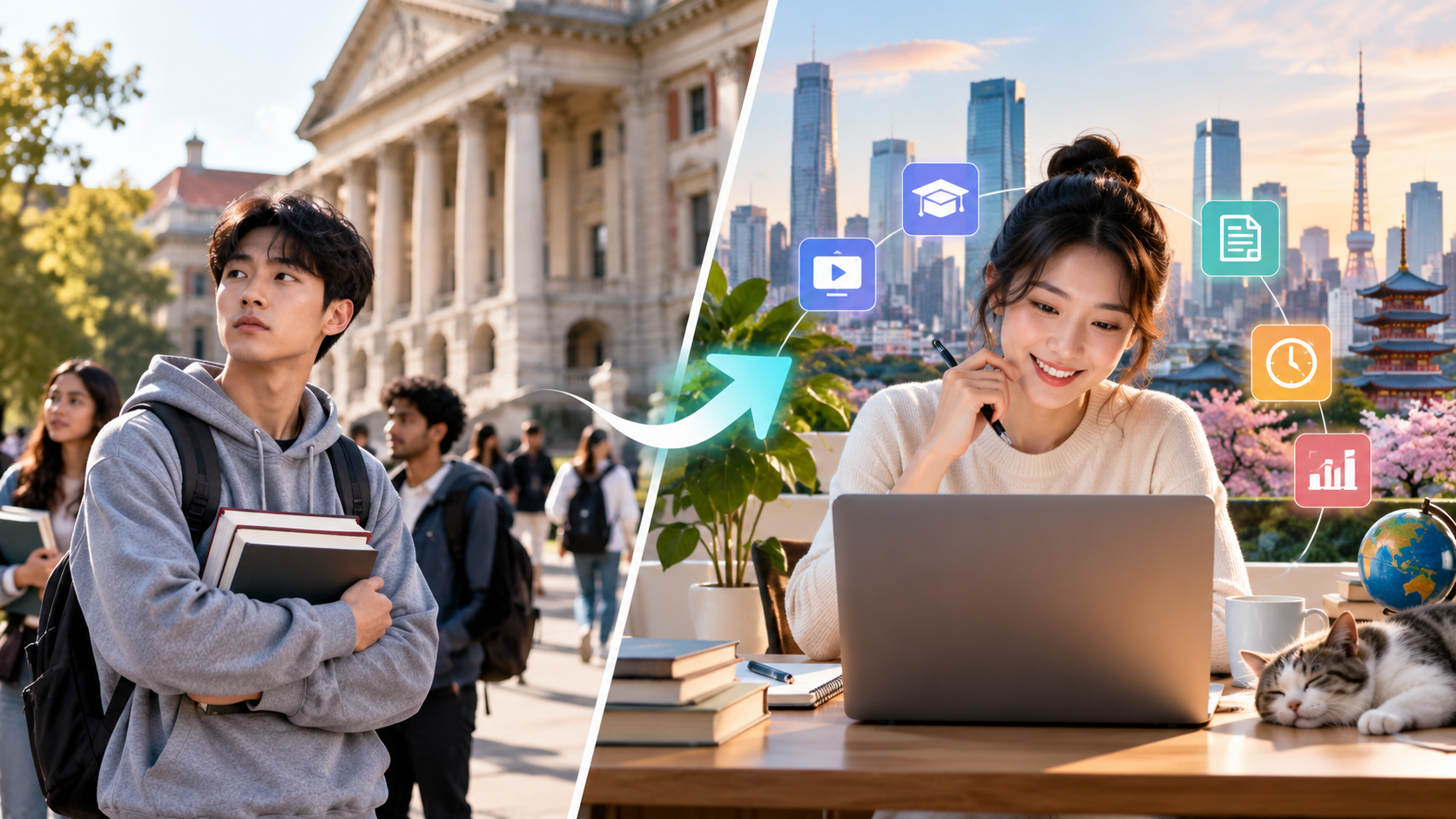
Education is changing alongside the way people work. Across Asia, professionals are increasingly balancing full-time employment, family responsibilities, career development, and the need to keep their knowledge current. For many, returning to a traditional classroom is difficult because fixed schedules and location requirements do not always fit modern professional life.
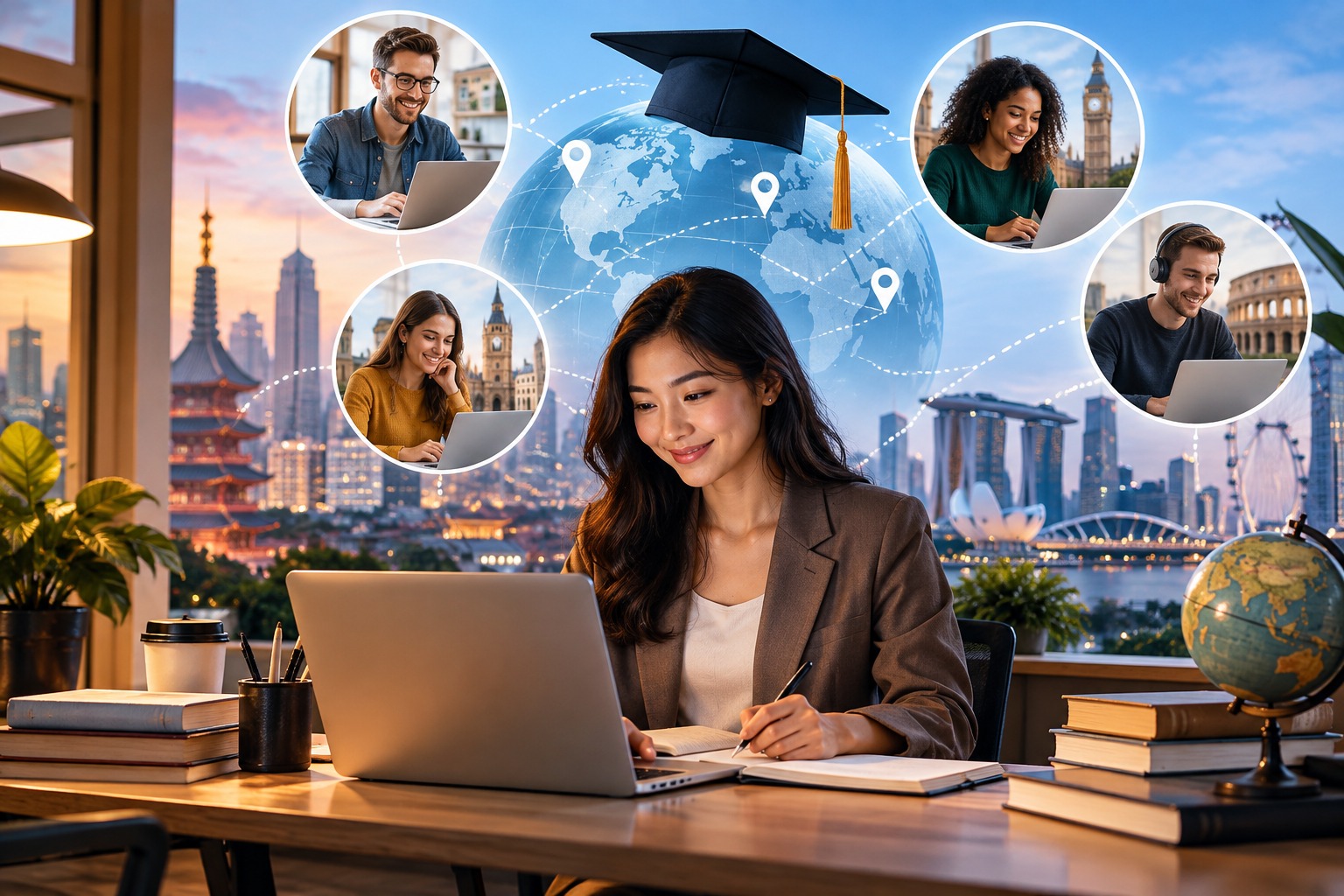
This is where flexible online learning in Asia has become increasingly relevant. Online education allows professionals to pursue academic and professional development while continuing with their existing responsibilities. Instead of requiring learners to reorganise their entire lives around education, flexible learning can allow education to fit more naturally into their routines.
The growth of digital technologies is also changing the skills expected in the workplace. Recent research from the Asian Development Bank indicates that demand for digital skills is spreading across occupations in Asia and the Pacific, making continuous learning increasingly important for professionals.
Flexible online education therefore represents more than a convenient alternative to classroom learning. It is becoming part of a broader shift towards lifelong learning, professional reskilling, and accessible higher education.
The modern Asian professional often operates in an environment where learning and employment cannot be treated as separate stages of life. A graduate may enter the workforce and later discover that a new qualification, specialised skill, or different area of expertise is necessary for career progression.
At the same time, working patterns have become increasingly diverse. Professionals may work across different time zones, travel for their jobs, manage teams remotely, or work irregular hours. A conventional programme with mandatory attendance at a fixed location can therefore create practical barriers.
Online education responds to some of these challenges by providing greater flexibility around when and where learning takes place. Depending on the programme, learners may access lectures, readings, assignments, discussions, and other academic resources according to their schedules.
This does not mean that online learning requires less commitment. Successful online education still requires discipline, time management, academic engagement, and consistent participation. The difference is that the learning environment can offer greater control over when these activities are completed.
The changing skills landscape also makes continuous education more relevant. A 2026 Asian Development Bank study found that demand for digital skills has expanded beyond traditionally technology-focused occupations. For professionals, this creates a practical reason to continue developing knowledge throughout their careers rather than relying solely on qualifications earned at the beginning of their working lives.
| Traditional Study Model | Flexible Online Learning | Professional Advantage |
|---|---|---|
| Fixed classroom schedule | Greater scheduling flexibility | Easier to combine study with employment |
| Location-dependent | Accessible from different locations | Useful for professionals who travel or relocate |
| Academic study often separated from work | Learning can take place alongside employment | Immediate connection between theory and practice |
| Longer breaks may be needed for study | Study can potentially continue during employment | Supports continuous professional development |
For international professionals, the location-independent nature of online education can also widen the range of programmes they can consider. However, students should always examine institutional recognition, programme quality, academic support, assessment standards, and applicable qualification requirements before enrolling.
One of the most important benefits of flexible online learning is time management. Professionals can organise their academic responsibilities around existing commitments instead of completely restructuring their professional schedules.
For example, an employee may study in the evening after work, complete readings during weekends, or use smaller periods of available time for academic activities. This flexibility can make higher education more compatible with professional life.
Another important benefit is accessibility. Professionals who live far from major education centres may have fewer opportunities to attend traditional programmes. Online education can reduce the importance of geographical distance, provided learners have adequate internet access and appropriate digital devices.
Flexibility can also support different learning preferences. Some learners benefit from reviewing recorded materials more than once, while others prefer reading independently before participating in discussions or completing assignments. A well-designed online programme can accommodate different approaches while maintaining clear academic expectations.
UNESCO's work on flexible learning pathways highlights the broader importance of learner-centred approaches that allow people to enter, progress through, and return to higher education at different stages of their lives.
However, flexibility should not be confused with unlimited convenience. Students still need structured learning outcomes, meaningful interaction, academic guidance, reliable assessment, and quality assurance. UNESCO has also highlighted the importance of quality assurance and recognition as higher education systems expand digital and online learning.
| Factor | Conventional Classroom Study | Flexible Online Study |
|---|---|---|
| Time | Usually predetermined | Often more adaptable |
| Location | Requires physical attendance | Can be accessed remotely |
| Work-study balance | May be challenging | Can be easier to coordinate |
| Learning resources | Usually accessed during institutional hours | Often available digitally |
| Self-management | Important | Particularly important |
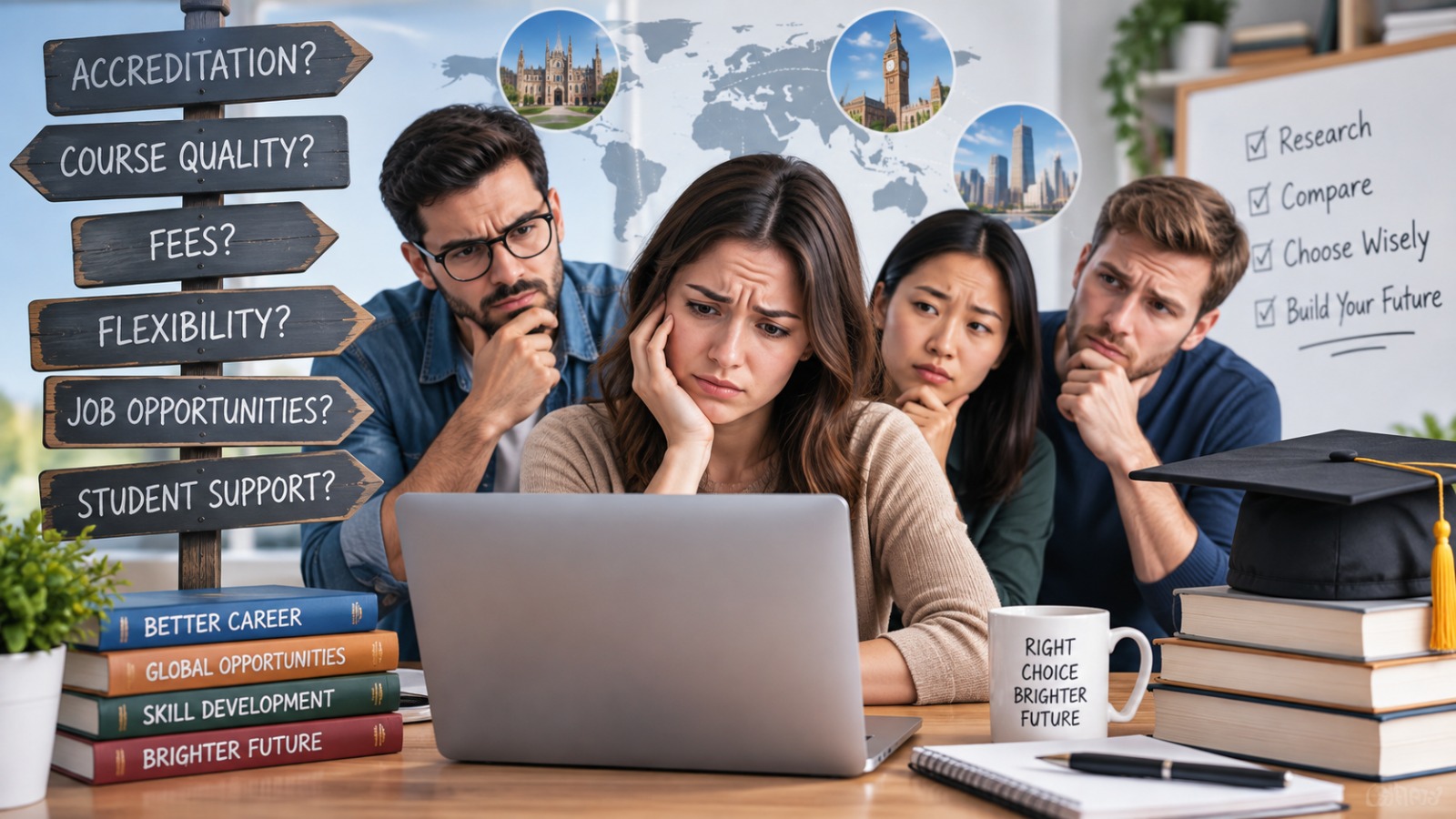
For professionals considering online education in Asia, the most useful question is therefore not simply whether a programme is online. It is whether the programme provides a credible academic experience that fits their professional circumstances.
Professional development increasingly involves continuous learning rather than completing one qualification and stopping. Changes in technology, management practices, business models, and industry expectations mean that professionals may need to update their skills several times throughout their careers.
Flexible online education can support this process by allowing professionals to pursue additional qualifications without necessarily leaving employment.
For example, a professional working in business may pursue further study in management, leadership, finance, entrepreneurship, or digital business. Someone working in education may develop expertise in educational leadership, curriculum development, learning technologies, or another specialised area. The relevance of the programme depends on the individual's existing qualifications, career objectives, industry, and professional requirements.
The connection between learning and employment can also strengthen practical application. A professional may be able to test academic concepts in their workplace, reflect on workplace challenges through assignments, and bring professional experiences into academic discussions.
This creates an important relationship between theory and practice. Instead of viewing education as something separate from employment, learners can use academic study to examine problems they encounter in their professional environments.
The growing emphasis on digital skills reinforces this relationship. ADB research has found that digital skills are becoming increasingly relevant across a wider range of occupations in Asia and the Pacific. (Asian Development Bank)
| Career Development Need | How Flexible Learning Can Support It |
|---|---|
| Updating professional knowledge | Allows continued study while working |
| Developing specialised expertise | Provides access to focused academic programmes |
| Building digital capabilities | Supports technology-enabled learning experiences |
| Preparing for new responsibilities | Can complement professional experience with academic knowledge |
| Lifelong learning | Makes continued education more compatible with different life stages |
A relevant programme page can help prospective learners understand how a specific qualification connects academic study with their professional goals. Similarly, reviewing an institution's academic and admissions information can help applicants understand entry requirements, programme expectations, assessment methods, and the overall student experience before making an informed decision.
The future of professional education is likely to be shaped by greater flexibility, digital transformation, lifelong learning, and closer connections between academic study and changing workforce requirements.
This does not necessarily mean that traditional universities or physical classrooms will disappear. Instead, higher education is increasingly developing multiple pathways through which learners can access knowledge and qualifications. Online, blended, modular, and other flexible approaches can exist alongside conventional programmes.
South Asia illustrates both the potential and the challenges of this transformation. UNESCO's recent work on digital transformation in South Asian higher education identifies opportunities for collaborative online learning and cross-border partnerships, while also noting continuing challenges involving connectivity, digital literacy, institutional readiness, and inclusion. (UNESCO)
This is important because flexibility alone does not guarantee educational quality. The future of online education will depend on how effectively institutions combine accessibility with academic standards.
Students will increasingly need to look beyond the delivery format and consider the complete learning experience. Questions about curriculum quality, faculty expertise, assessment, academic support, qualification recognition, student services, and institutional credibility remain important regardless of whether education is delivered online or on campus.
Technology is also likely to influence how professional education is delivered. Artificial intelligence, learning analytics, digital credentials, virtual collaboration, and personalised learning environments may create new possibilities for learners and institutions. At the same time, these developments will require careful attention to academic integrity, data protection, digital inclusion, and responsible technology use.
The objective should therefore not be simply to make education more digital. It should be to make learning more relevant, accessible, academically sound, and responsive to the realities of modern professional life.
Flexible online learning is becoming increasingly important for Asian professionals because it responds to a fundamental reality of modern life: people often need to learn while they work, rather than choosing between education and employment.
Its value lies in more than convenience. Flexible education can support lifelong learning, professional development, geographical accessibility, and the continuous acquisition of skills. At the same time, learners must evaluate programmes carefully and consider academic quality, recognition, support, assessment, and relevance to their career objectives.
As workplaces continue to evolve, professional education will also need to evolve. The future is likely to include a wider range of learning pathways that allow individuals to develop knowledge and skills at different stages of their careers.
For Asian professionals, flexible online learning can therefore provide a practical pathway for remaining academically engaged and professionally prepared in a rapidly changing world. The most meaningful choice is not simply to study online, but to choose an academically credible learning experience that fits both present responsibilities and future ambitions.