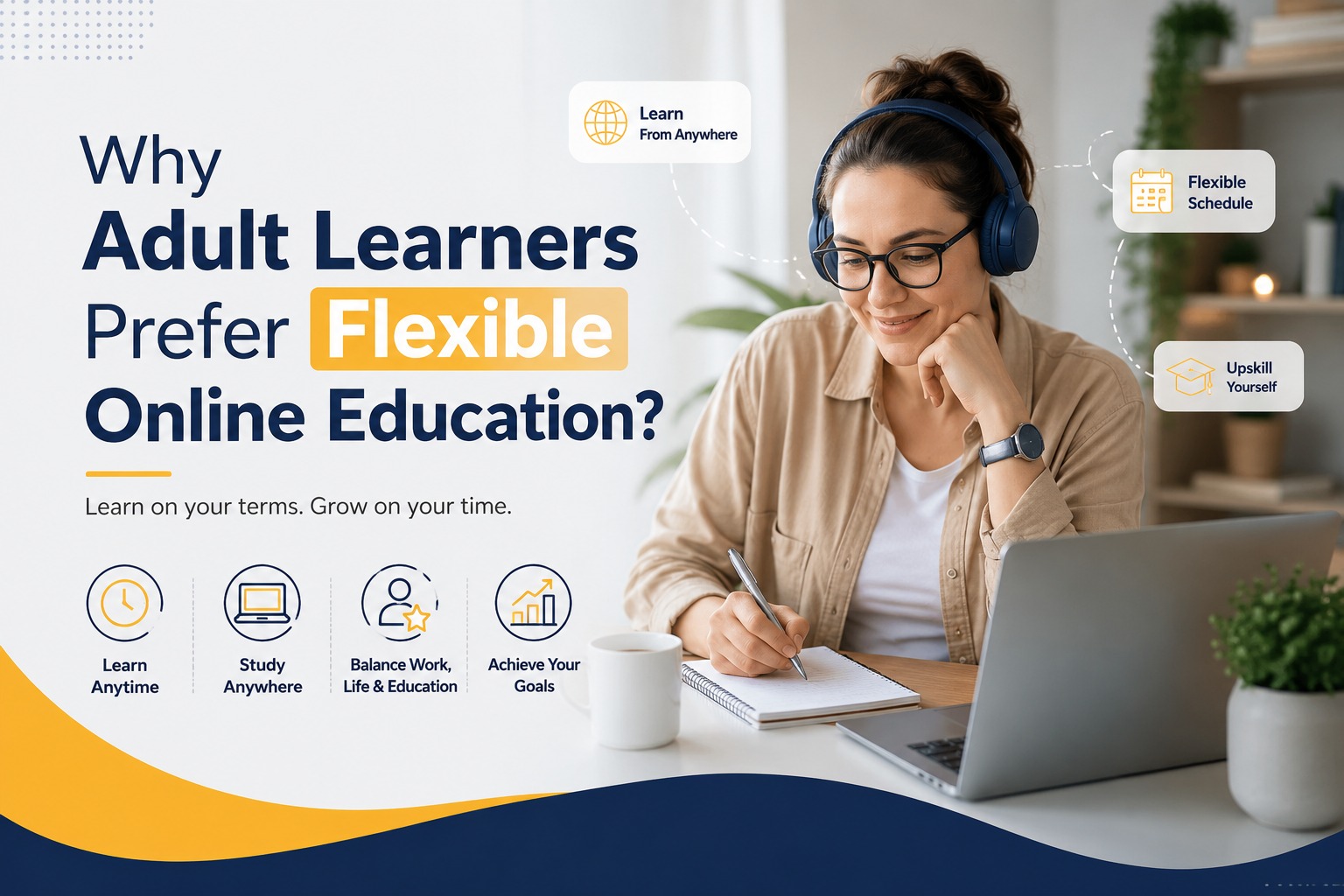
For many working professionals, returning to education is no longer a decision between employment and study. The growth of digital education has made it increasingly possible to develop academic knowledge and professional skills while continuing to work. Online learning for working professionals offers flexibility, accessibility, and opportunities for lifelong learning without requiring learners to leave their existing careers.
However, flexibility does not automatically make learning easy. Professionals often have to balance employment responsibilities, academic deadlines, family commitments, personal responsibilities, and the demands of maintaining a healthy routine. The challenge is therefore not simply finding time to study. It is developing a sustainable approach to learning that fits within an already busy professional life.
Understanding these challenges is important for learners considering online education as well as educators and academic institutions designing programmes for working adults. With effective planning, realistic expectations, and appropriate support, professionals can study while working without allowing either responsibility to suffer unnecessarily.
| Common Challenge | Why It Matters | Practical Response |
|---|---|---|
| Time management | Work and study compete for limited time | Create a realistic weekly study schedule |
| Staying motivated | Progress may feel slow alongside work | Set short-term academic goals |
| Managing stress | Multiple responsibilities can cause fatigue | Build recovery time into the routine |
| Maintaining consistency | Flexible learning requires self-discipline | Develop repeatable study habits |
The central lesson is simple: successful online learning is less about studying for long hours and more about using available time consistently and purposefully.
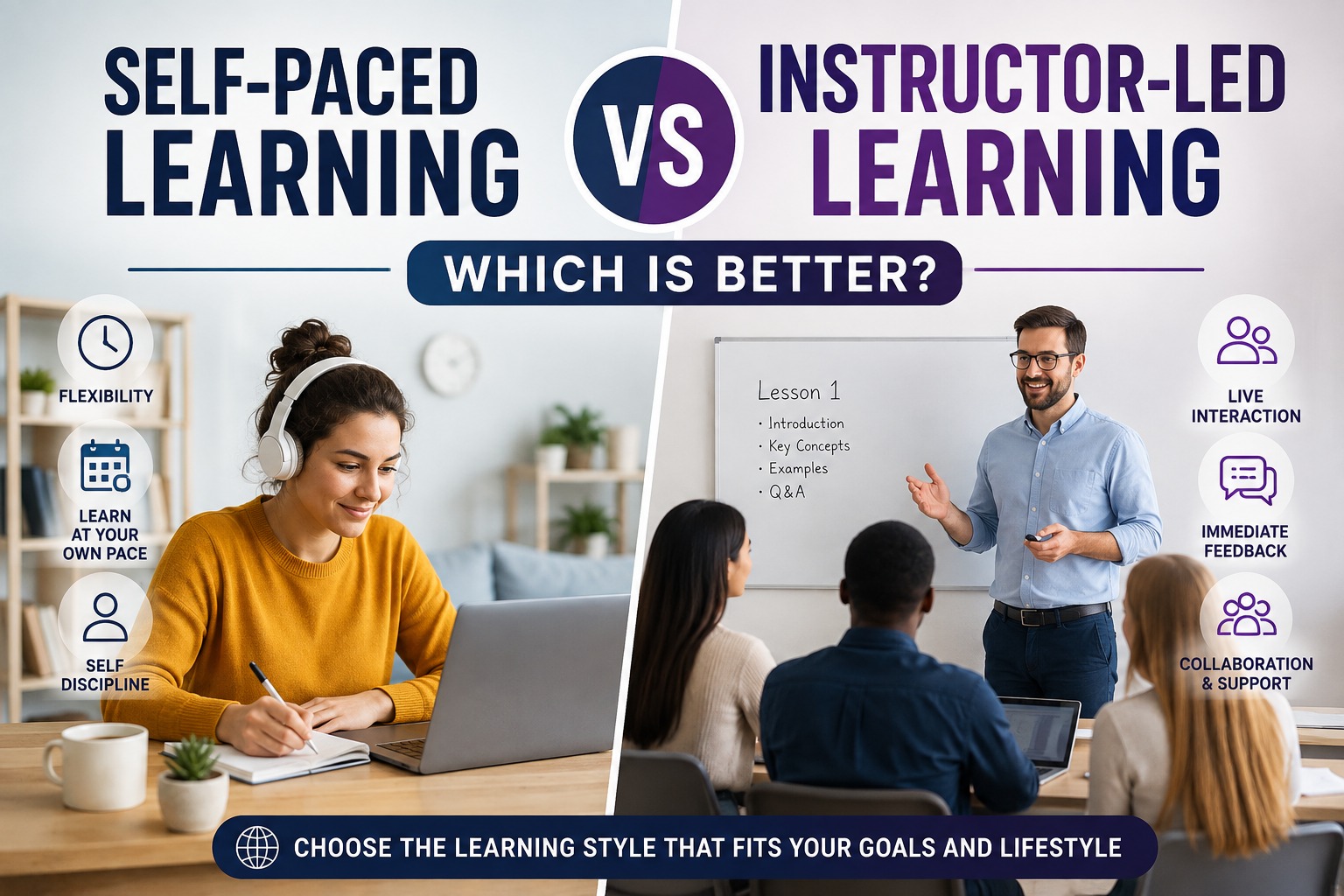
Time management is one of the most common challenges faced by professionals entering online education. Unlike traditional classroom programmes, online learning can provide greater control over when and where learning takes place. At the same time, this flexibility means learners often have to take greater responsibility for organising their own academic schedules.
A professional working a full-time job may have meetings during the day, commuting responsibilities, family commitments in the evening, and limited energy at the end of the day. Assuming that several uninterrupted hours will always be available for study can therefore create an unrealistic plan.
Effective time management begins with understanding the difference between available time and usable study time. A learner may technically have two free hours in the evening but may only have enough concentration for one hour of meaningful academic work. Recognising this distinction helps professionals create schedules they can actually maintain.
| Factor | Traditional Full-Time Study | Flexible Online Education |
|---|---|---|
| Schedule | Usually fixed | Often more adaptable |
| Location | Primarily campus-based | Can be accessed remotely |
| Work compatibility | Can be difficult | Generally more compatible |
| Self-discipline | Important | Especially important |
| Daily interaction | Often face-to-face | Frequently digital |
| Time planning | Institution-led timetable | Greater learner responsibility |
This comparison does not mean that one approach is universally better than another. Instead, it demonstrates why flexible education can be particularly relevant to professionals whose employment responsibilities cannot easily be paused.
A useful approach is to divide academic work into different categories. Reading, watching lectures, participating in discussions, preparing assignments, and reviewing material do not necessarily require the same level of concentration. Routine activities can be scheduled around less demanding periods, while complex academic tasks can be reserved for times when concentration is strongest.
For example, a professional might use a short weekday session for reading and dedicate a longer weekend period to assignment development. Over time, this creates a predictable academic rhythm without requiring the learner to reorganise their entire professional life.
Motivation is another important consideration when professionals study online. Working adults may begin a programme with a clear objective, such as career development, greater subject knowledge, professional advancement, or personal achievement. Yet motivation can decline when academic work becomes difficult or when professional responsibilities become particularly demanding.
One reason is that online learners may not always experience the same immediate sense of academic community associated with a physical classroom. Without regular face-to-face interaction, it can sometimes be harder to recognise progress or feel connected to fellow learners.
Motivation therefore needs to be supported by structure. Instead of relying entirely on enthusiasm, professionals can establish smaller academic goals that create visible progress. Completing a reading, contributing to a discussion, finishing a section of an assignment, or preparing for an assessment can each become a measurable achievement.
Purpose → Small Goals → Consistent Action → Visible Progress
Start by identifying why the qualification or course matters professionally or personally. Then translate that larger purpose into smaller academic goals. Consistent action turns those goals into progress, while visible progress can reinforce motivation.
Reflection can also be valuable.
Ask yourself:
What do I want this learning experience to help me do differently in my professional life?
The answer may relate to leadership, communication, subject expertise, confidence, career mobility, or the ability to take on greater responsibility. Connecting academic learning with professional practice can make study feel more relevant and meaningful.
For education professionals, for example, an academic concept studied during an online programme may immediately influence classroom practice, institutional planning, research activities, or professional decision-making. This connection between theory and practice can strengthen engagement.
Institutions also have an important role. Effective online programmes should provide clear academic expectations, accessible learning materials, meaningful interaction, constructive feedback, and appropriate academic support. Motivation is not solely an individual responsibility. The design of the learning environment matters as well.
Balancing employment and education can be rewarding, but it can also create periods of significant pressure. Stress may arise when several deadlines coincide, working hours increase unexpectedly, or personal responsibilities become more demanding.
A common mistake is to treat every available hour as potential study time. Although this may appear productive in the short term, consistently sacrificing rest can reduce concentration, creativity, and academic performance.
Professionals should therefore view wellbeing as part of academic planning rather than as something separate from education. Adequate sleep, breaks, physical activity, social interaction, and periods without academic work can support sustainable learning.
Another important principle is early action. If a learner begins falling behind, ignoring the problem rarely makes it easier. Contacting appropriate academic support, reviewing priorities, and reorganising the study schedule can prevent a temporary difficulty from becoming a larger academic problem.
Stress management is particularly relevant to professional learners because the skills developed through managing competing priorities can also have workplace value. Planning, prioritisation, communication, resilience, and self-management are useful capabilities across many professional environments.
Successful online learning for working professionals depends on developing a system rather than searching for a perfect routine. The most effective strategy will differ according to employment patterns, family responsibilities, learning preferences, and academic workload.
One useful approach is the 4P Success Framework:
Understand course requirements, assessment dates, reading expectations, and weekly commitments. Place important academic deadlines alongside professional responsibilities so that potential conflicts can be identified early.
Not every task requires immediate attention. Distinguish between urgent activities and important long-term academic work. Completing a small part of an assignment several days early can be more effective than attempting the entire task immediately before submission.
Online learning should not become an isolated experience. Engage with academic discussions, learning activities, feedback, and available support. Participation can improve understanding while also helping learners feel connected to the wider academic community.
Review what is working and what is not. A study schedule should be adjusted when professional or personal circumstances change. Sustainable learning depends on adaptation rather than rigid perfection.
At the end of each week, ask:
| Reflection Question | Purpose |
|---|---|
| What academic work did I complete? | Measure progress |
| What took longer than expected? | Improve planning |
| Did work interfere with study? | Identify conflicts |
| What can I change next week? | Improve consistency |
| What did I learn that applies to my work? | Connect theory with practice |
This type of reflection can gradually transform online study from an additional responsibility into an integrated part of professional development.
For learners exploring postgraduate opportunities, reviewing the structure of a relevant programme can also help determine whether its academic expectations and delivery format fit their professional circumstances. Exploring the appropriate programme page can provide further context about the curriculum, learning experience, and academic expectations.
Likewise, prospective students should review the institution's academic and admissions information carefully before making an enrolment decision. Understanding entry requirements, application procedures, academic expectations, and available support can help professionals make a more informed choice.
Before beginning an online programme, working professionals can consider the following:
This checklist is not intended to suggest that every learner needs a perfect schedule before beginning. Rather, it encourages realistic preparation. Professional and personal circumstances will inevitably change, and successful learners need the flexibility to respond to those changes.
Online learning has created valuable opportunities for professionals who want to continue developing their knowledge while remaining active in their careers. However, the flexibility of digital education comes with responsibility. Time management, motivation, stress, and consistency can all influence the quality of the learning experience.
The solution is not to eliminate every challenge. Instead, professionals can develop practical systems that make those challenges manageable. A realistic study schedule can reduce time pressure. Clear goals can support motivation. Healthy boundaries can reduce stress. Regular reflection can improve consistency.
For working professionals, flexible education can provide more than an academic qualification. It can create an opportunity to connect theoretical knowledge with professional experience, reflect on existing practices, and develop capabilities that remain valuable throughout a career.
The most successful approach is therefore not about finding more hours in the day. It is about making purposeful use of the time available, maintaining realistic expectations, and treating learning as a sustainable part of professional growth. With the right preparation and support, professionals can study while working and build an educational experience that complements rather than competes with their careers.