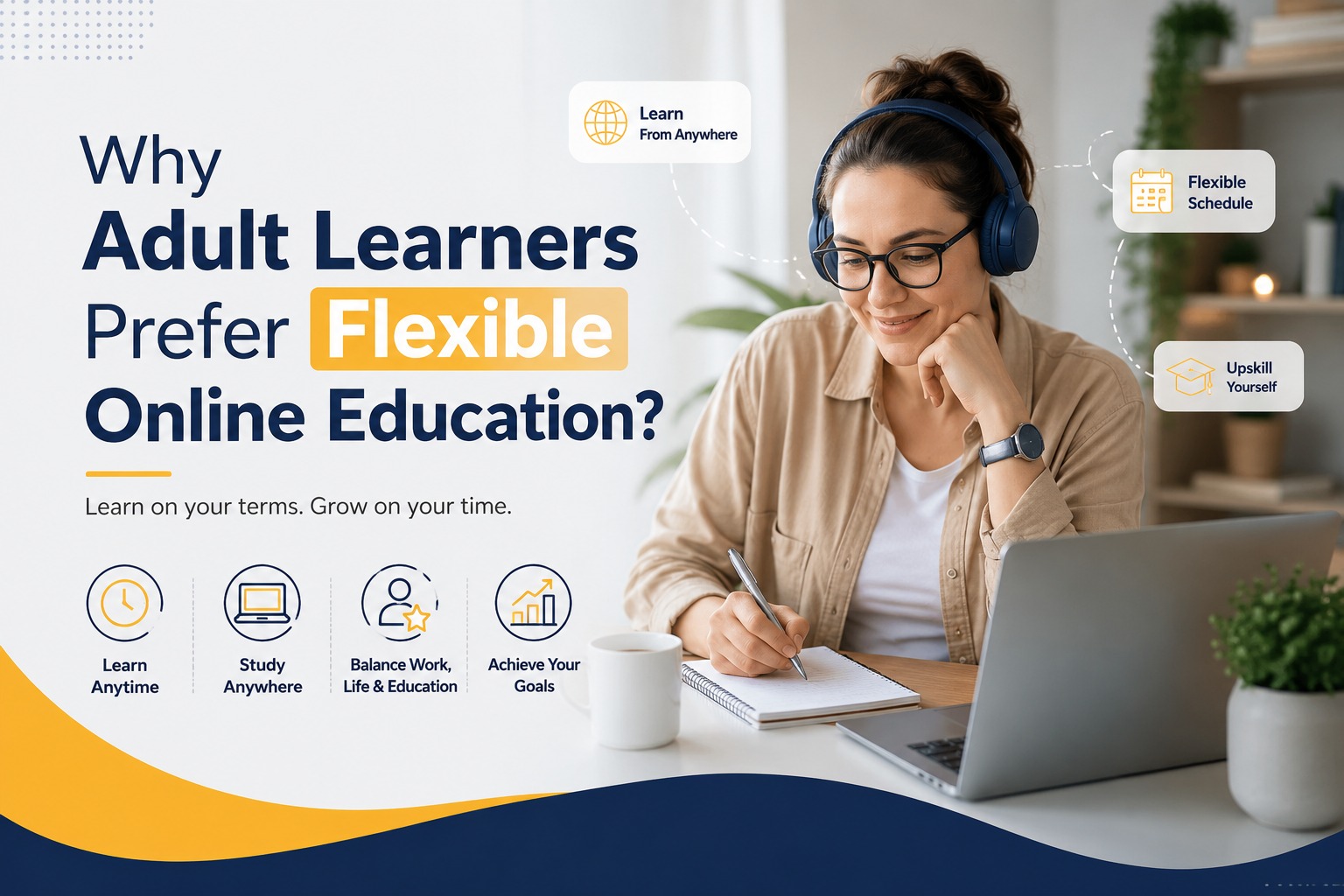
The way people learn has changed considerably in recent years. Advances in digital technology, changing professional expectations, and the growing demand for flexible education have created more choices for students and working professionals. Traditional classroom education continues to play an important role, but learners can now access courses, lectures, academic resources, and professional development opportunities from almost anywhere in the world.
Two learning approaches that are particularly relevant in this changing environment are self-paced learning and instructor-led learning. Both can support meaningful academic development, but they organise the learning experience in very different ways. Self-paced learning gives students greater control over when and how they engage with course materials, while instructor-led learning provides a structured environment guided by an educator.
For international students and working professionals, the decision between these models can have practical consequences. Time zones, employment responsibilities, family commitments, learning preferences, and career objectives can all influence which approach is more suitable.
However, deciding between the two should involve more than considering convenience. The quality of a learning experience also depends on curriculum design, academic support, assessment methods, interaction, feedback, and opportunities to apply knowledge. In this online education comparison, neither approach should be viewed as universally superior. Instead, learners should consider which model aligns most effectively with their individual circumstances and educational goals.
Self-paced learning is an educational approach in which students have considerable control over the speed and timing of their studies. Rather than requiring every learner to attend a lesson at the same time and progress through material at exactly the same rate, self-paced courses generally allow students to organise their study around an established course framework.
This approach has become increasingly important in online education. A professional working full time, for example, may not be able to attend a conventional class during the day. Self-paced learning can allow that person to study in the evening, during weekends, or during other periods of availability.
Flexibility is one of the most obvious advantages, but it is not the only consideration. Self-paced learning also encourages students to take greater responsibility for their own academic progress. They may need to plan weekly study sessions, monitor deadlines, review difficult concepts independently, and maintain motivation without the routine of a traditional classroom.
For learners who are comfortable working independently, this can be an advantage. They can spend additional time on unfamiliar topics and move more quickly through concepts they already understand. This creates an opportunity for a more personalised learning experience.
Digital resources can further strengthen this model. Depending on the programme, students may have access to recorded lectures, reading materials, interactive activities, digital assessments, discussion forums, research resources, and other learning tools. These resources can make it easier for students to revisit material and reinforce their understanding.
Nevertheless, self-paced learning requires discipline. Flexibility does not mean that learning happens automatically. Without regular classroom meetings, some students may postpone coursework or underestimate the amount of time required to complete assignments. Effective time management therefore becomes an important part of the learning process.
The quality of academic support is also important. A well-designed self-paced programme should not leave students entirely on their own. Access to instructors, academic advisors, feedback mechanisms, technical support, and clear assessment criteria can help students remain engaged and understand what is expected of them.
Self-paced learning can be particularly relevant to professionals who are already familiar with workplace responsibilities and need an educational model that can fit around their existing schedules. It can support lifelong learning by making it easier for individuals to continue developing their knowledge without necessarily stepping away from employment.
Instructor-led learning follows a more structured educational model in which an educator guides students through course content, activities, discussions, and assessments. It can take place in a physical classroom or through a live online learning environment.
One of the key strengths of instructor-led learning is direct interaction. Students have opportunities to ask questions, clarify difficult concepts, receive feedback, and participate in discussions. When a topic is complex, an instructor can respond to students' questions and provide additional examples or explanations.
This interaction can be particularly valuable in subjects where discussion and interpretation are important. Students may gain a deeper understanding by hearing different viewpoints and engaging in academic conversations with both instructors and classmates.
Structure is another important feature. Regular classes and scheduled assignments can provide students with a predictable academic routine. For learners who find it difficult to create their own schedules, this structure can encourage consistency and accountability.
Instructor-led learning can also support collaborative learning. Group projects, classroom debates, presentations, workshops, and peer discussions can help students develop communication and teamwork skills alongside subject-specific knowledge. These skills are relevant across many professional environments.
However, structured learning can present challenges for students with demanding schedules. Fixed class times may conflict with employment, family responsibilities, or other commitments. International learners may also need to consider time-zone differences when participating in live online sessions.
Online instructor-led education can reduce some of these challenges through virtual classrooms, recorded sessions, online discussion platforms, and flexible academic support. Even so, students should review attendance requirements and session schedules before enrolling in a programme.
Another important consideration is the nature of the subject. Some fields benefit significantly from live demonstrations, supervised activities, practical discussions, or immediate feedback. In such situations, instructor guidance can add considerable value to the learning experience.
At the same time, instructor-led learning does not eliminate the need for independent study. Students are still expected to read, research, prepare assignments, review course materials, and take responsibility for their academic development. The instructor provides direction, but successful learning remains a shared responsibility.
When comparing self-paced learning with instructor-led learning, it is useful to consider the entire learning experience rather than focusing on a single advantage.
| Factor | Self-Paced Learning | Instructor-Led Learning |
|---|---|---|
| Learning pace | Students generally control the pace of their studies | Students usually follow a structured course pace |
| Flexibility | High flexibility around personal schedules | More dependent on scheduled classes and activities |
| Instructor interaction | May be less frequent or arranged through specific channels | Regular interaction is a central feature |
| Feedback | Often provided through assessments and available academic support | Direct feedback can be provided during learning |
| Independence | Requires strong self-direction and time management | Provides greater external structure and accountability |
| Peer interaction | Depends on course design and available online communities | Often includes discussions and collaborative activities |
| Accessibility | Can suit learners with different schedules and locations | May require attendance at specific times |
| Practical learning | Can use simulations, projects, videos, and digital activities | Can include demonstrations and supervised activities |
| Best suited for | Independent learners and busy professionals | Learners who prefer guidance and regular interaction |
| Main challenge | Maintaining motivation and managing time independently | Balancing fixed schedules with personal responsibilities |
The comparison shows that each model has distinctive strengths. Self-paced learning generally offers greater control over time, while instructor-led learning tends to provide greater structure and direct interaction.
Career outcomes should also be considered carefully. The learning model itself does not determine whether a student will succeed professionally. Factors such as programme quality, curriculum relevance, assessment standards, academic support, practical experience, and individual effort all contribute to educational outcomes.
For example, a working professional who already has substantial practical experience may prefer self-paced study because it allows them to focus their academic time on specific areas of development. In contrast, a learner entering a new academic field may value regular instructor guidance and opportunities to ask questions.
There is also growing recognition that these approaches do not need to remain completely separate. Many modern programmes combine independent study with instructor interaction. Students may review recorded lectures or readings independently before attending a live seminar, completing a group project, or participating in an instructor-led discussion.
This blended approach can provide both flexibility and academic support. It reflects a broader shift in higher education towards learning environments that are designed around different learner needs rather than relying on a single educational format.
Before choosing between self-paced and instructor-led education, consider the following questions:
Answering these questions honestly can help learners identify the environment in which they are most likely to remain engaged and make consistent progress.
There is no single learning model that is best for everyone. The right choice depends on personal circumstances, learning preferences, academic objectives, and the requirements of the chosen programme.
Self-paced learning may be particularly suitable for working professionals, independent learners, and students who require considerable flexibility. It can make it easier to integrate education into an existing routine while allowing learners to spend more time on challenging material when necessary.
Instructor-led learning may be more appropriate for students who value regular academic guidance, structured schedules, direct feedback, and interaction with educators and peers. It can be especially useful for subjects that depend on discussion, collaboration, practical demonstrations, or supervised activities.
International learners should also consider factors such as time zones, technology requirements, language support, academic calendars, assessment arrangements, and communication with faculty. A course described as flexible may still contain important deadlines or scheduled activities, so prospective students should review programme and admissions information carefully.
It is also useful to consider long-term professional goals. Someone seeking to strengthen independent research and digital learning skills may benefit from a self-directed environment. Another learner preparing for a collaborative professional role may place greater value on instructor interaction and group activities.
The future of higher education is likely to include an increasing combination of learning approaches. Digital platforms can provide flexible access to academic content, while educators can offer mentorship, feedback, discussion, and academic direction. Recorded lectures, virtual classrooms, interactive activities, digital assessments, and collaborative technologies can work together to create more adaptable learning environments.
The important question is therefore not simply whether self-paced learning or instructor-led learning is better. Instead, learners should ask which approach provides the right balance of flexibility, structure, interaction, and support for their particular educational journey.
For most learners, neither self-paced learning nor instructor-led learning can be considered universally better. The better option depends on individual circumstances, learning preferences, career objectives, and the level of flexibility or guidance required.
However, when a programme successfully combines both approaches, blended learning can offer a particularly balanced experience. Learners can study independently through digital resources while also benefiting from instructor guidance, discussions, feedback, and collaborative activities. This combination can be especially valuable for international students and working professionals who need flexibility without giving up meaningful academic interaction.
The most important consideration is therefore not choosing the model that appears more convenient, but selecting a programme whose teaching approach supports the learner's academic goals, professional needs, and preferred way of learning.
Self-paced learning and instructor-led learning offer two different approaches to achieving academic and professional development. Self-paced learning provides greater independence and flexibility, while instructor-led learning offers structure, direct guidance, interaction, and accountability.
Neither model is universally better. A working professional with a demanding schedule may value the flexibility of self-paced education, while a learner who benefits from regular discussion and instructor feedback may prefer a structured learning environment.
The most informed decision comes from considering personal learning preferences alongside programme quality, academic requirements, career objectives, and available support. Students should look carefully at how a programme is delivered rather than choosing an approach based only on convenience.
As higher education continues to evolve, the distinction between independent and instructor-guided education may become less rigid. Modern programmes can combine flexible digital resources with meaningful academic interaction, giving learners opportunities to take greater control of their education while still receiving expert guidance.
Ultimately, the best learning approach is the one that enables a student to remain engaged, develop relevant knowledge and skills, and apply that learning confidently in academic or professional settings. By understanding the strengths and limitations of both models, learners can make a thoughtful choice that supports their goals today while preparing them for the changing demands of tomorrow.